Why You Should Engage a Land Planner Early
By Shannon Acevedo, AICP, LEED AP Homes
June 2026
The pre-development game is about spending the least amount of money to get the necessary insight and assurance to move forward with a deal. This means investing conservatively in that early due diligence stage since there is a chance of walking away from the project.
But how do you know what is necessary or optimal?
The typical plan is to hire a land planner or a land use attorney if entitlements will be needed to achieve the development plan. For example, an agricultural property may need a residential rezoning and so a property is put under contract while a land planner is retained to secure entitlements. A developer may sketch a conceptual site plan or hire a local civil engineering firm to whip something up that is appropriate for high-level review and due diligence. The rezoning proceeds with the land planner coordinating with the civil engineer and developer to move the process forward and hopefully get an approval.
Securing entitlements is no joke especially in covetous jurisdictions facing growth pressures. But this is just one component of a land planner’s ability to provide value. So often, this is the limit of scope of a planning consultant and projects are underwritten and designed with high-level plans that may have not been fully vetted against the breadth of code regulations beyond use and density restrictions.
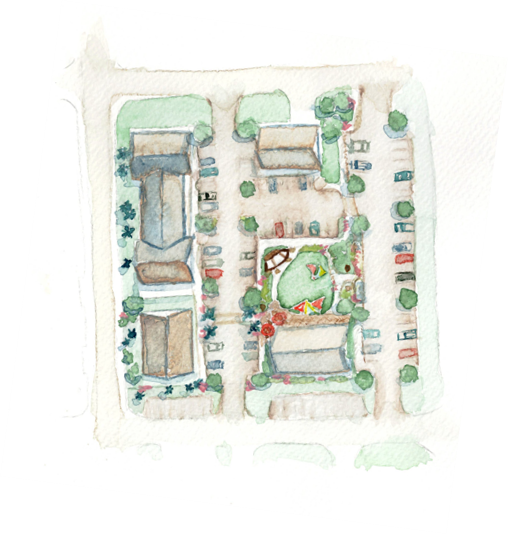
Let’s assume a site is already rezoned for its desired use. A developer with the property under contract may decide to bypass planning consulting and go straight into engineering and architecture to start the design and permitting process. Afterall, time is money so any opportunity to shorten the process should be utilized.
However, this can sometimes be a trap unless there is someone on the project team that is very adept at local and regional code to understand the multitude of design considerations to make a project permissible. This goes beyond just which uses and intensity are allowed including items like:
- Buffer widths for adjacent incompatible uses and perimeters
- Road spacing for access management and control
- Lot configuration and maximum block lengths
- Open space and recreational requirements and appropriate parking provided
- Setback and lot width requirements and definition
- Wetlands and sensitive environmental habitat considerations and regulations
As a simple example, let's assume you have a development project that will cost a total of $40M to build. This is broken up by roughly:
- Land Acquisition: $4M
- Hard Costs: $25M
- Soft Costs: $10M
Generally speaking, when it comes to consultants (part of the soft cost budget), architects will be the most expensive, then civil engineering, and planning is behind, so it’s a small investment to enlighten potential roadblocks and snags to permitting a project. A civil engineer adept and familiar with local code will pick up on most design regulations, but their forte is design and they can’t be expected to foresee every requirement. They may know the open space requirements, and easily look up the setbacks and lot width requirements, but let’s say they are not as deeply familiar with how to interpret a complex incompatible land use adjacency table and mistakenly allot a width of ten feet instead of the required twenty feet. The 80% drafted civil plans are prepared and submitted for jurisdictional review. They receive a comment back that a twenty feet width is required, an honest mistake. However, this small change means having to completely redesign the plans as all the roads and lots will have to shift in order to accommodate the change.
Even “fixed costs” such as permitting fees can be somewhat controllable or at least some strategy employed when consulting with a planner. One needle-moving permit cost is impact fees. Oftentimes, these fees are based on square footage. An experienced planner will have such items front of mind during the design process and can raise a hand if they see an early architectural design decision create a disadvantageous permitting outcome later in the process. For example, if there is a large impact fee jump from a home that is under 1,800 sf and above 1,800 sf, it would not be a good idea to design a home that is 1,850 sf. Some jurisdictions are employing reductions in water capacity fees for projects that design with low water-use such as xeriscaping lawns and using low water usage fixtures and piping. Knowing these regulatory incentives upfront can allow them to be proactively secured without redesign and rework. Additionally, planners are up to date on new fee ordinances and can consult on the optimum time to get permits and pay fees before rate hikes are incurred.
The most impactful cost savings that a land planner provides early in the process is time.
The most impactful cost savings that a land planner provides early in the process is time. This is a difficult thing to measure, because you are hiring someone for their value creation of avoiding the thing you didn’t even know was going to happen. How do you measure the value of saving an extra submittal of civil engineering drawings, because code requirements were comprehensively reviewed upfront? How do you measure the value of giving an architect very clear regulatory direction to avoid having to do an extra couple of turns of plans and saving an additional building permit review?
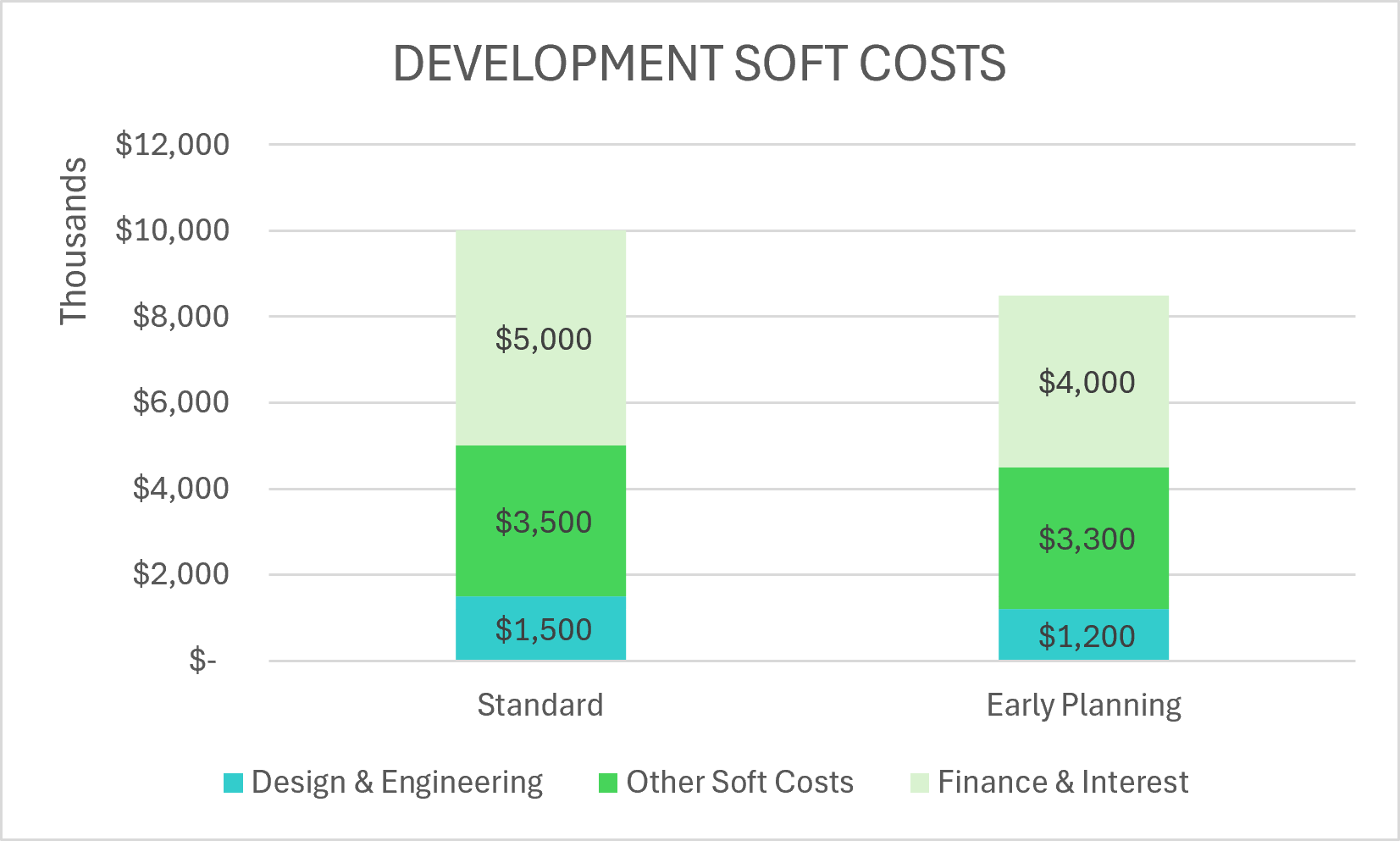
In the scenario of the $40M residential project, this could be the difference of saving $1.5M from the $10M soft cost budget. This value is estimated in our example by the following cost reductions:
- $300k in redesign savings
- $200k in reduction of potential fees through design and timing permitting
- $1M savings in interest expense from a shortened development cycle
This savings is typically difficult to project, because the developer tendency is to start with the "Early Planning" budget projection and then use change orders to add dollars as unforeseen circumstances arise. The important take away is to assign a value to risk and take precautions to minimize it to the extent that is practical and reasonable.
There is no fool-proof plan and there will always be unforeseen circumstances to contend with in real estate development whether or not a land planner is engaged. However, a small investment in planning upfront can significantly reduce that level of uncertainty and unwanted surprises.